Home security basics
Why a small, well-chosen safe matters at home
A home safe is a compact, locked container built to protect your most important paperwork and small valuables: passports, Emirates ID copies, visa papers, tenancy contracts, title deeds, spare bank cards and a small cash reserve in dirhams. In the UAE, where many families live in apartments and travel often, the goal is not a bank-vault sized cabinet in the living room. The goal is a modest safe that fits inside a wardrobe or built-in closet, resists forced entry, and only opens for the people you trust.
Choosing well means balancing four things: what you actually need to store, how the safe locks, how it is fixed in place, and how it handles fire and humidity. Get those right and the safe becomes invisible in daily life, but decisive on the day something goes wrong.
Step 1
Match the size to what you truly store
Before looking at brands, list what will go inside. For most UAE households, a safe with an internal volume between 10 and 25 litres is enough for the whole family’s paperwork and a modest cash float. Bigger is not better: a large floor safe is harder to hide, harder to fix down properly, and more tempting to a thief who assumes the contents match the size.
- Passports for every family member, in their original covers
- Emirates ID cards, driving licences and residency stickers
- Tenancy contract, Ejari, title deed or mortgage papers
- Marriage and birth certificates, attested copies
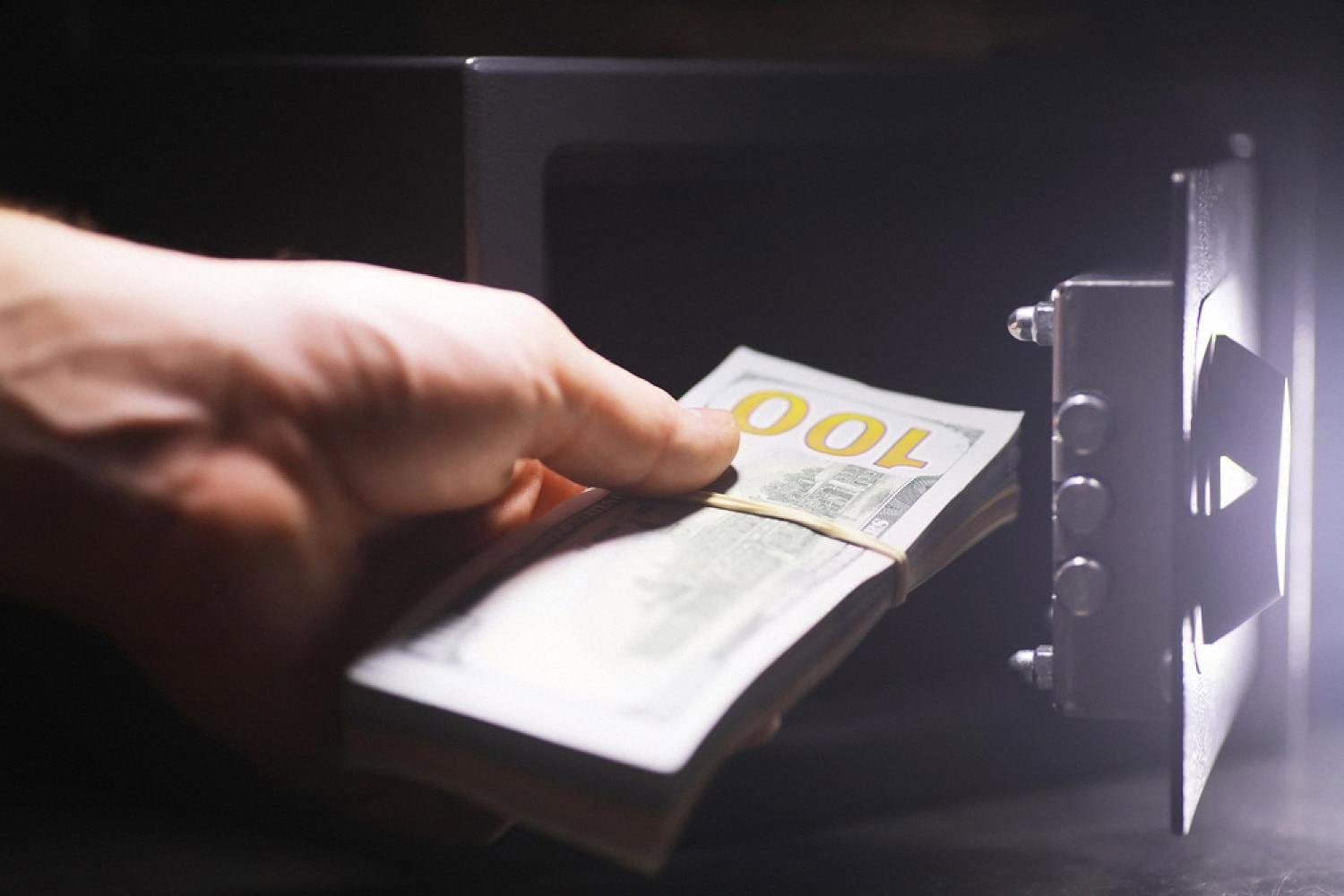
- A small cash reserve, spare bank cards and a USB backup
Aim for a safe that fits your list with about 20 percent free space. That leaves room for new documents without forcing you to upgrade in a year.
Step 2
Pick the right lock: key, code or fingerprint
The lock is the single feature you interact with every time you open the safe, so pick one that suits how your household actually behaves. A shared code that everyone forgets is worse than a simple key. A biometric lock that reads five fingerprints is often the most practical option for a family that opens the safe several times a week.
- Key lock. Cheapest and most reliable, but the key itself becomes a weak point. Only useful if you have a genuinely secure place to keep it, and a spare stored elsewhere.
- Electronic keypad. Good middle ground. Look for models that lock out after several wrong tries and have a mechanical override key for battery failures. Change the default factory code before you use it.
- Biometric fingerprint. The most convenient for daily use. Better units let you enrol several fingerprints, so parents and adult children each have their own access without sharing a code. Choose one that also accepts a backup PIN.
- Dual lock. Combines a code or biometric reader with a physical key. Slower to open, but noticeably harder to defeat.
Whichever you pick, insist on a model with a manual key override. Batteries die, and you do not want to discover that on the morning of a flight from DXB.

Step 3
Look past the door: build, fire and water
A thick door with a shiny keypad can hide a thin steel body that a determined intruder pries open in minutes. Read the spec sheet, not the marketing photo. For document storage in the UAE, three technical points matter more than the rest.
- Body steel of at least 3 mm, door steel of at least 5 mm, with live locking bolts on more than one side
- A recognised fire rating, ideally 30 to 60 minutes at temperatures above 800 C, tested to a standard such as UL or EN 1047
- A rubber or intumescent seal around the door to keep out smoke, dust and the fine humidity that damages paper in coastal cities like Dubai and Abu Dhabi
If you plan to store USB drives, external SSDs or hard disks with family photos, remember that standard fire safes protect paper, not electronics. For digital media, look for a data-rated safe or store the drives inside a sealed media insert.
Step 4
Install it so it cannot simply walk away
A small safe that sits loose on a shelf is a gift to a burglar: they carry it out and open it later with tools. Any safe under about 50 kg must be bolted down. Most quality units come pre-drilled for exactly this reason.
- Fix it to concrete or a solid wall. Use the manufacturer’s anchor bolts into the villa floor slab or the concrete wall inside a built-in wardrobe. Avoid gypsum partition walls.
- Hide it, but reach it. Inside a walk-in closet, behind hanging clothes or inside a bedroom cabinet works well. You want it out of sight from a casual visitor, but easy to open at 4 a.m. before a trip.
- Keep it dry. UAE humidity is hard on paper. Place silica gel packs inside and replace them once a year.
- Do not photograph the interior. Never share pictures of the open safe on social media, and do not store the unlock code in a note on your phone.
If you want a discreet, design-led unit that blends into a bedroom or study, a specialist home document safe from a UAE supplier is worth considering: they combine biometric access with cabinetry-grade finishes that do not shout “safe” to anyone walking past.
The buying sequence at a glance
- Inventory first. Write down every document and item, then pick a size with 20 percent headroom.
- Decide the lock type. Match it to how many people need daily access and how disciplined the household is with codes and keys.
- Check the build. Steel thickness, locking bolts on multiple sides, a real fire rating and a proper door seal.
- Confirm anchoring. Pre-drilled base or back holes, supplied bolts, and a fixing location on solid concrete.
- Plan the backups. A spare key in a trusted second location, a written record of the code with a family member abroad, and silica gel inside.
- Register and service. Keep the warranty, note the serial number separately, and change batteries once a year on a fixed date.
Quick reference: safe types compared
| Type | Best for | Typical lock | Watch out for |
|---|---|---|---|
| Compact document safe (10-25 L) | Passports, IDs, small cash reserve | Biometric or keypad with key override | Must be bolted down |
| Fire-rated cabinet | Deeds, contracts, certificates | Keypad or dual lock | Check the actual fire test rating |
| Wall safe | Discreet storage behind cabinetry | Keypad or biometric | Needs a solid wall, not gypsum |
| Floor safe | Villas with slab floors | Dual lock | Harder to install in apartments |
| Furniture-integrated safe | Design-conscious homes | Biometric | Costs more, worth it for daily use |
Whichever category you shop in, the winning combination in a UAE home is usually the same: a compact biometric unit, bolted into a wardrobe, with a proper fire rating and a mechanical override key kept somewhere only you know.
Frequently asked questions
What size safe do I need for a family of four in Dubai?
For four passports, four Emirates IDs, tenancy and vehicle papers, a couple of certificates and a modest cash reserve, an internal volume of 15 to 25 litres is usually enough. That is roughly the size of two stacked shoeboxes and fits inside most built-in wardrobes.
Leave about 20 percent free space for new documents you will collect over the next few years, such as renewed passports or additional visa papers.
Is a biometric fingerprint safe reliable enough for daily home use?
Modern biometric safes from established brands are reliable when you enrol each fingerprint two or three times from slightly different angles. Look for a model that stores several fingerprints so every adult in the household has their own access.
Always choose a unit with a backup PIN and a mechanical override key. If the battery dies or the sensor fails, you still want to reach your passport in time for a flight.
Should the safe be fireproof if I live in an apartment?
Yes. Apartment fires spread through shared walls and service shafts, and civil defence response times vary. A safe rated for at least 30 minutes of fire protection gives your paper documents a realistic chance of surviving.
If you also want to protect USB drives or external hard disks, choose a data-rated safe, because standard paper-rated units allow internal temperatures that damage electronics.
Where is the best place to install a home safe in a UAE villa or apartment?
Inside a master bedroom wardrobe or a built-in closet is usually the best compromise between discretion and convenience. Bolt it to the concrete floor slab or a solid concrete wall, not to gypsum board partitions.
Avoid obvious locations such as the study desk or under the bed, and never place a safe in a maid’s room or storage room that outside contractors regularly enter.
Can I store cash in dirhams and foreign currency in the same safe?
Yes, and it is a sensible habit for anyone who travels. Keep a small emergency float in dirhams plus a modest amount in a common travel currency such as US dollars or euros.
Do not treat the safe as a replacement for a bank account. Large sums are safer in a UAE bank, and cash beyond household emergency needs earns nothing sitting in a metal box.
What should I do if I forget the code or lose the override key?
Contact the supplier or an authorised locksmith with proof of ownership, such as the original invoice and your Emirates ID. Reputable UAE safe dealers keep records tied to the serial number and can arrange a controlled opening.
To avoid the situation, store the override key at a trusted relative’s home or in a bank safe deposit box, and keep a written copy of the code somewhere separate from the safe itself.
How often should I service a home safe?
Change the batteries once a year on a fixed date you will remember, such as the start of Ramadan or a birthday. Test the lock, check the door seal for damage and replace the silica gel packs inside.
Every few years, ask the supplier to inspect the bolts, hinges and locking mechanism, especially if the safe lives in a humid coastal apartment.

Skydiver, shiba-inu lover, music blogger, vintage furniture lover and collaborator. Performing at the crossroads of aesthetics and purpose to express ideas through design. Let’s chat.